Mahadev Foundation / Samam / Avni

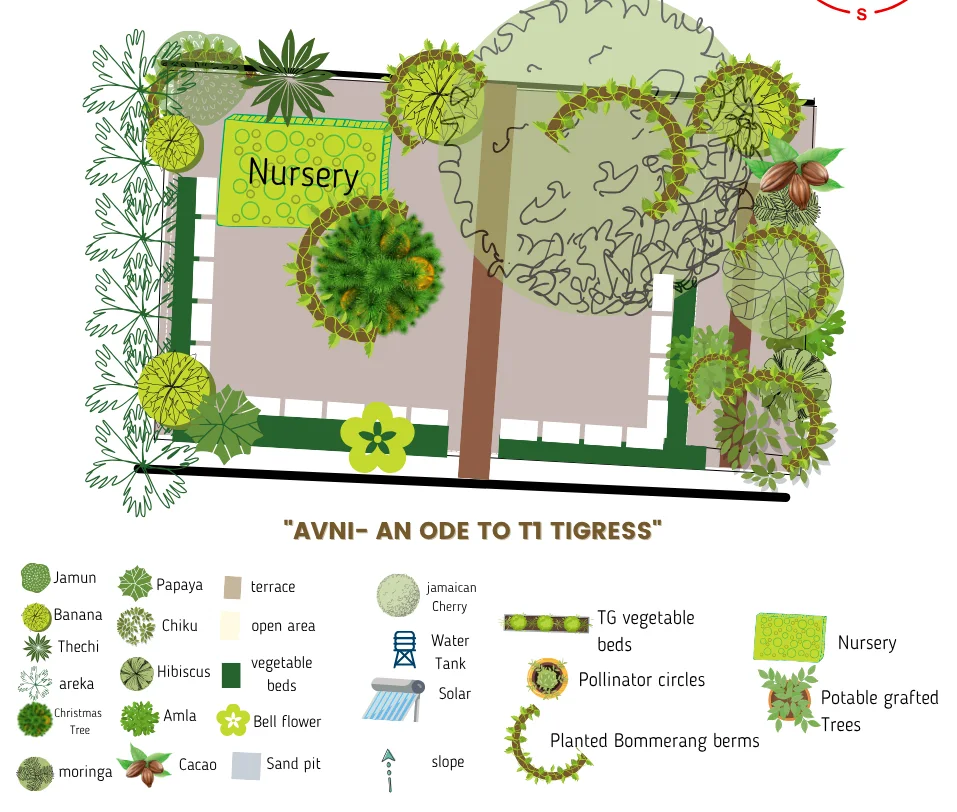
Avni Backyard Forest was a thousand square feet of lawn behind a rented house in Akshay Nagar, Bengaluru, with apartment blocks on every side. Over five years it became a food forest. Its concept map is titled “Avni — an ode to T1 Tigress”. Taranya shows what the method does on an acre of farmland. Avni shows it works in a rented backyard.
It began in 2019 with a patchy, overgrown lawn and two plants that came with the house, a chiku and a guava. Lawn takes water and gives little back. This one was replaced, from the edges inward, with layers of fruit trees, shrubs, creepers and a ground layer that keeps itself going.
Of rented backyard, with apartments on every side.
Thirty-five of them edible.
No synthetic fertiliser or chemical in that time. In the last summer it was never watered by hand.
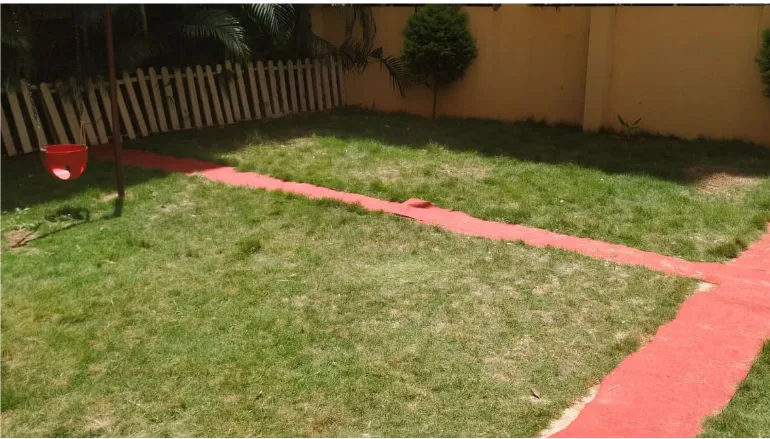
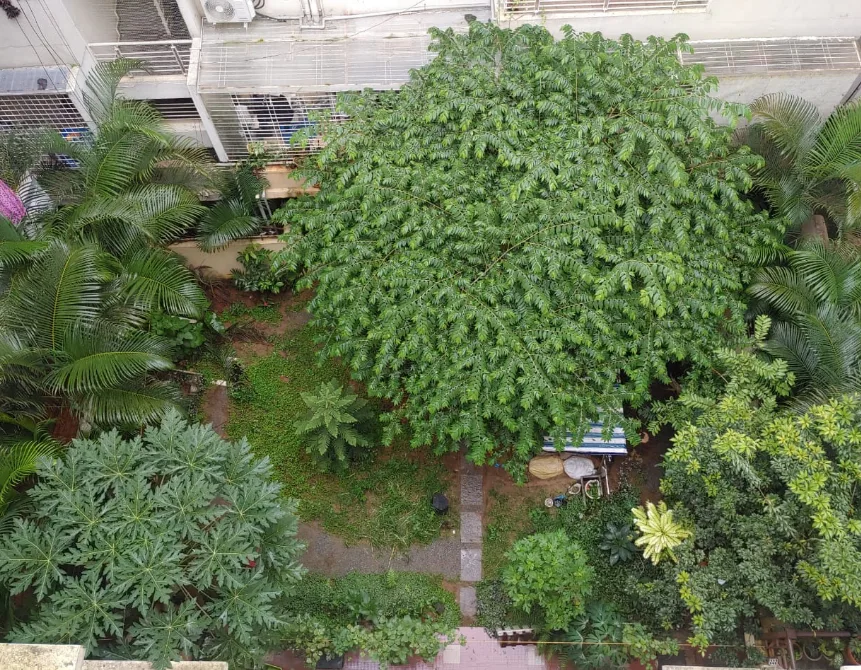
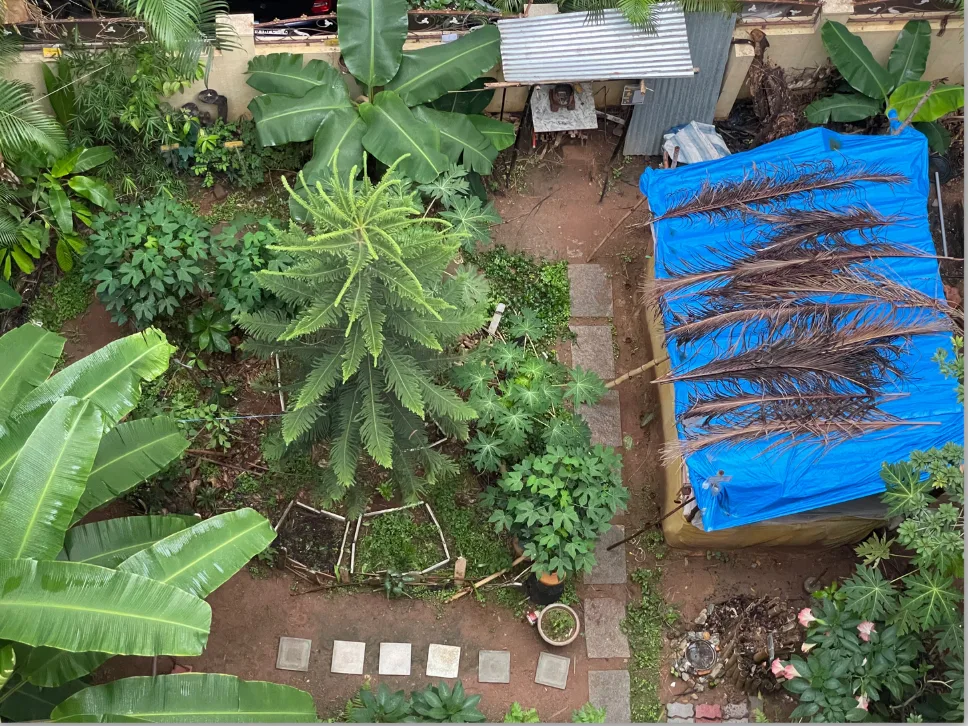
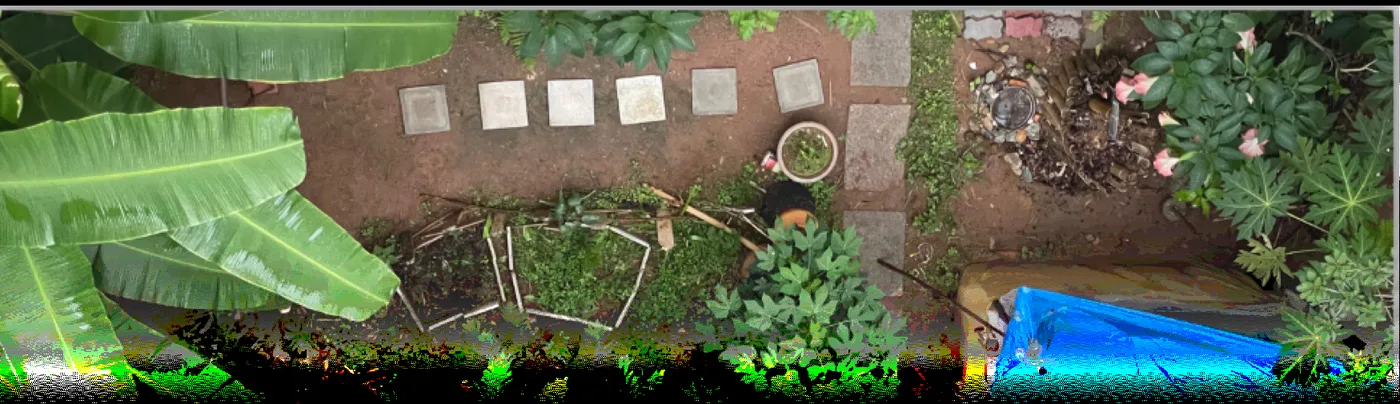
The yard sat at the bottom of a concrete canyon, with four to five hours of sun a day, and only around midday. Below two inches of red clay lay compacted construction rubble, so in the monsoon the water had nowhere to go and the yard flooded. The site was drawn to scale before anything was dug: the elements on it, then the ways the water could move.
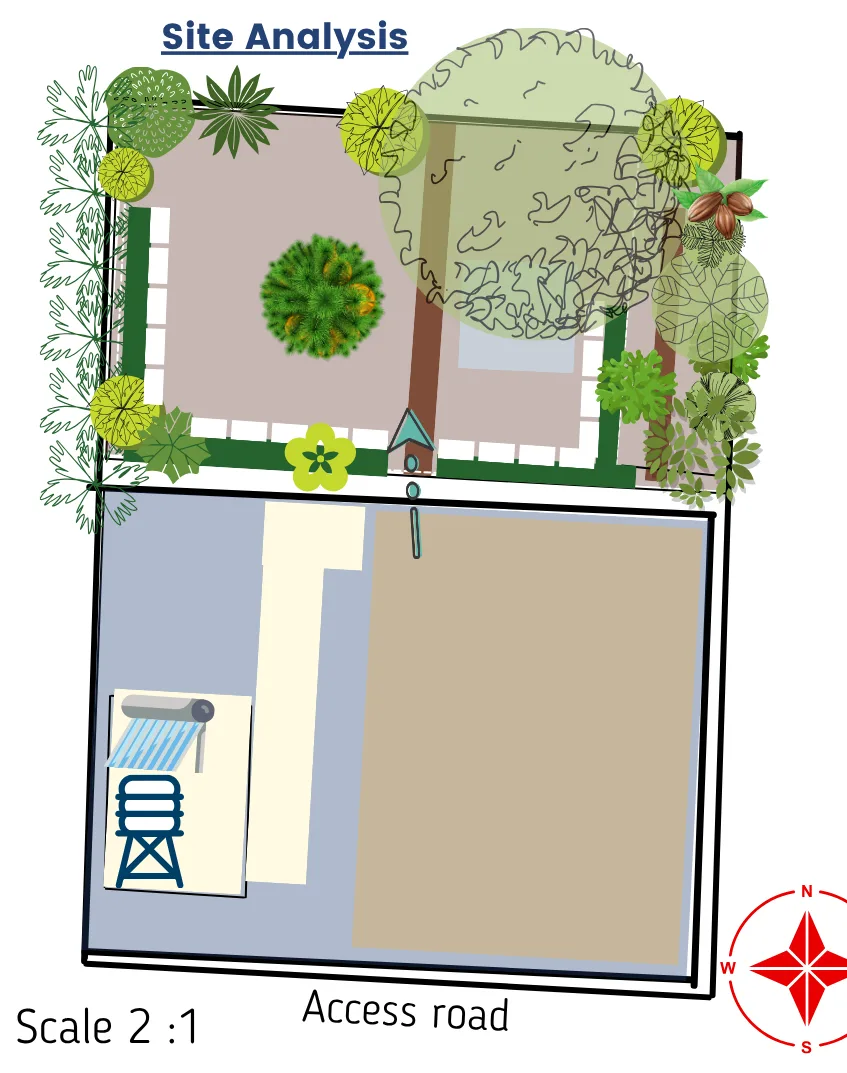
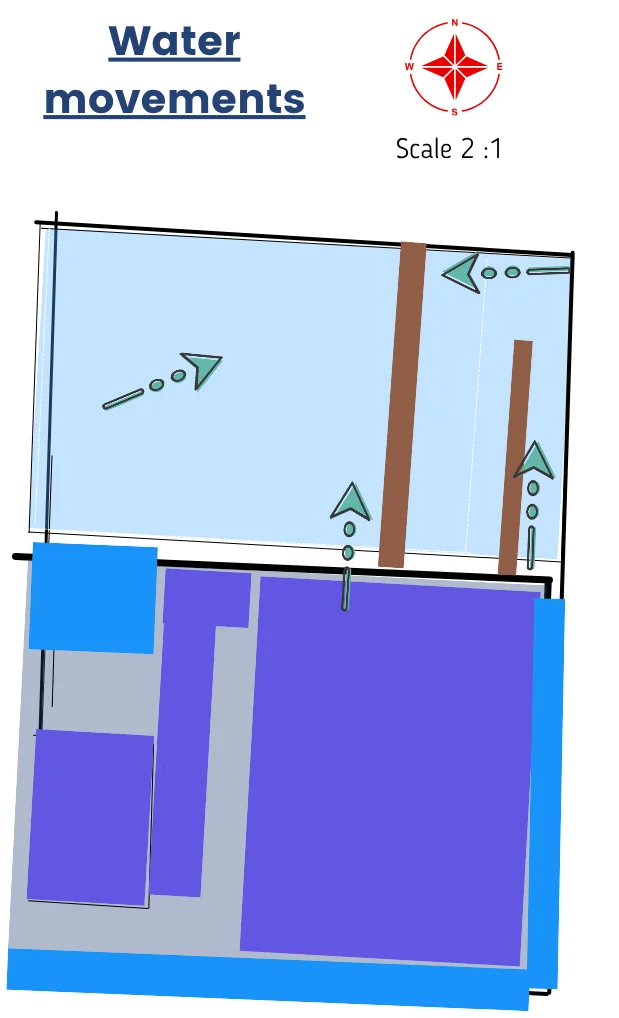
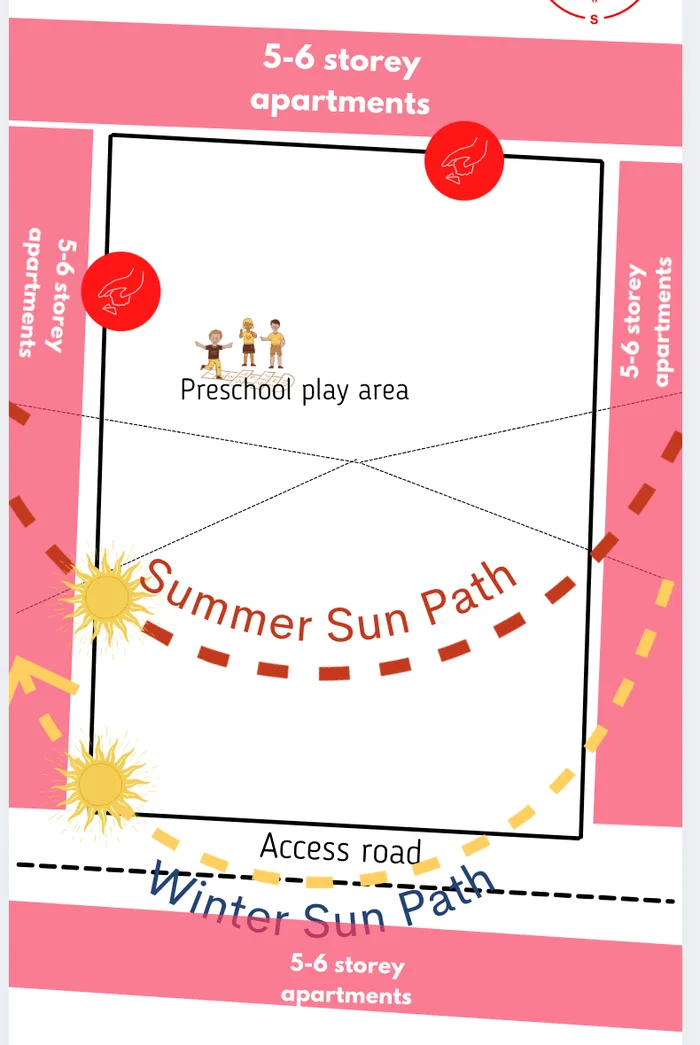
The plan was checked against the real thing, in the rain.
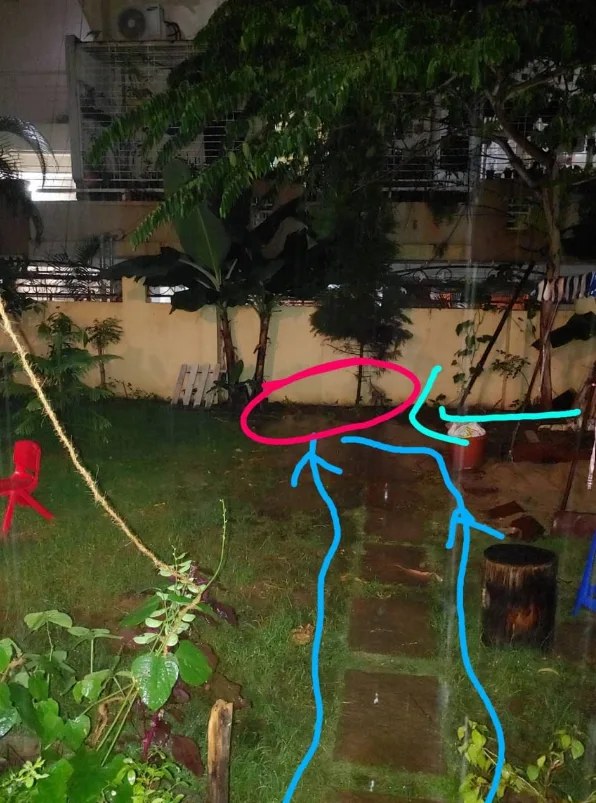
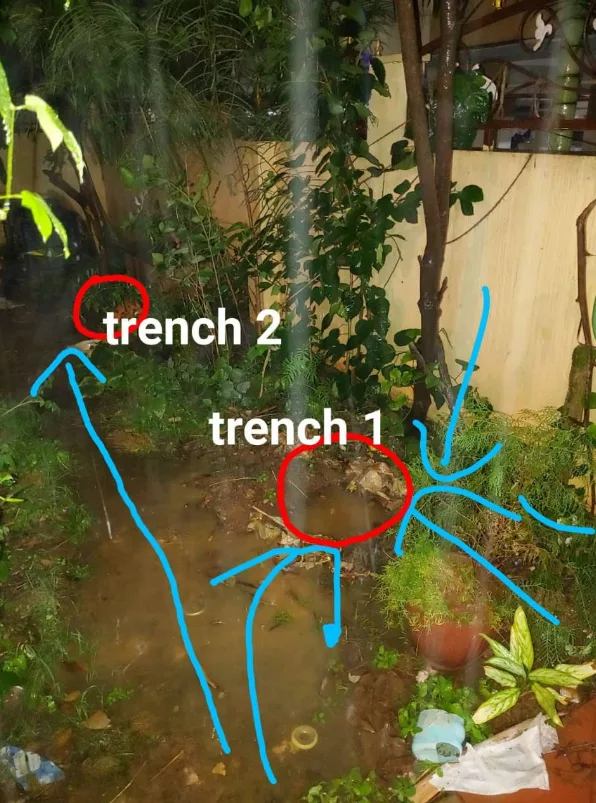
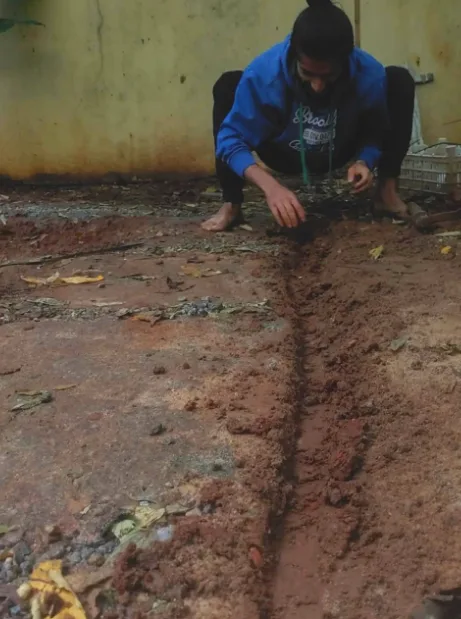
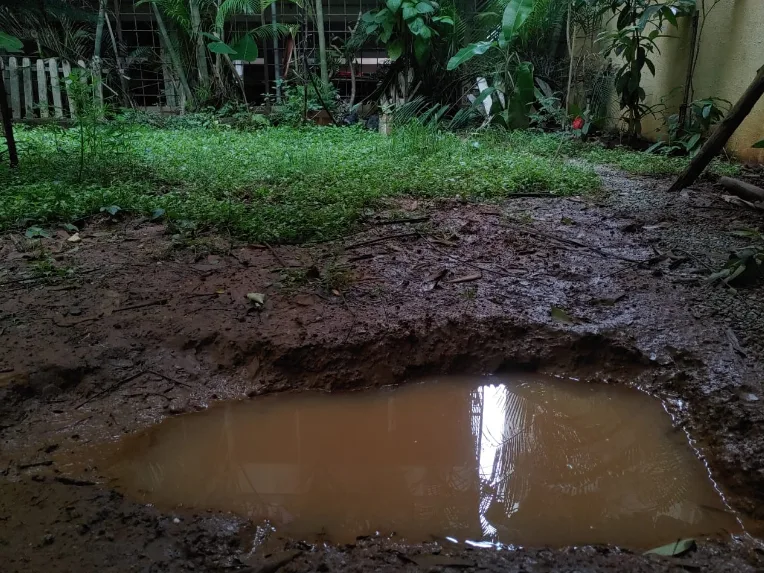
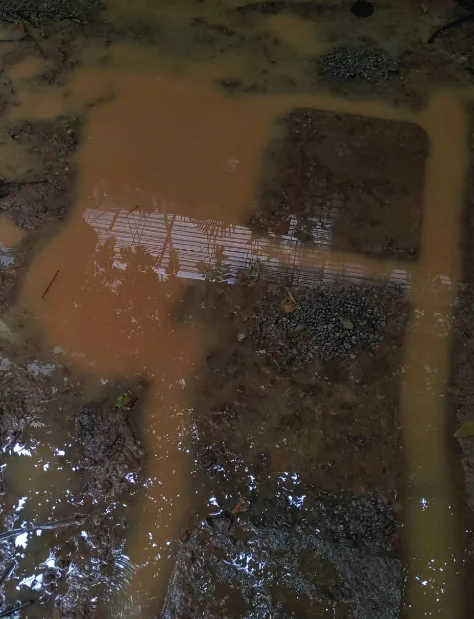
At the low northern end, a percolation pond took the flood and let it sink through the rubble into the ground. A trench filled with leaves ran along one edge, to soak up what the pond missed. They were dug by hand, and the first rain showed they worked. Then came the mulch: dead leaves, brought in from the street and left where they fell. One rule held for five years — nothing leaves the garden.
The concept map lays out a nursery, vegetable beds, pollinator circles, boomerang berms and grafted fruit trees: jamun, banana, areca, papaya, chiku, amla, jamaican cherry, moringa, cacao, hibiscus and bell flower. Over the years the forest also took in avocado, coffee, passion fruit, jackfruit and Mexican spinach, with a gliricidia biofence on one side and a hugelkultur bed on another.
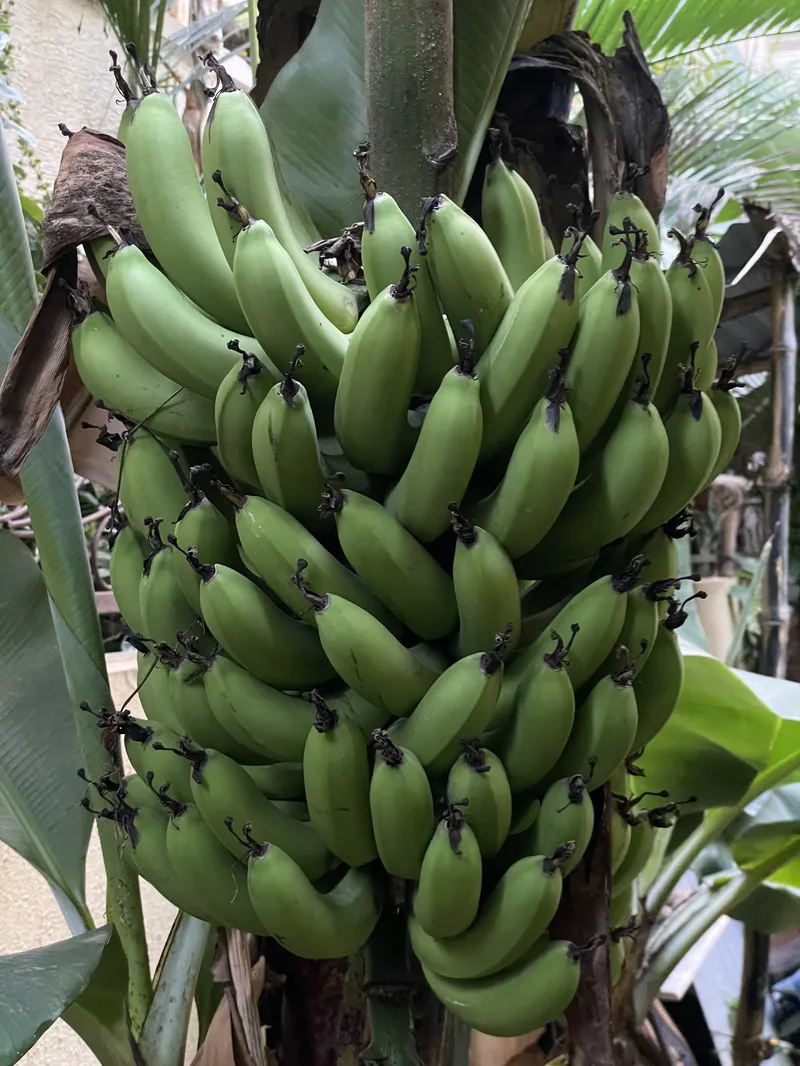
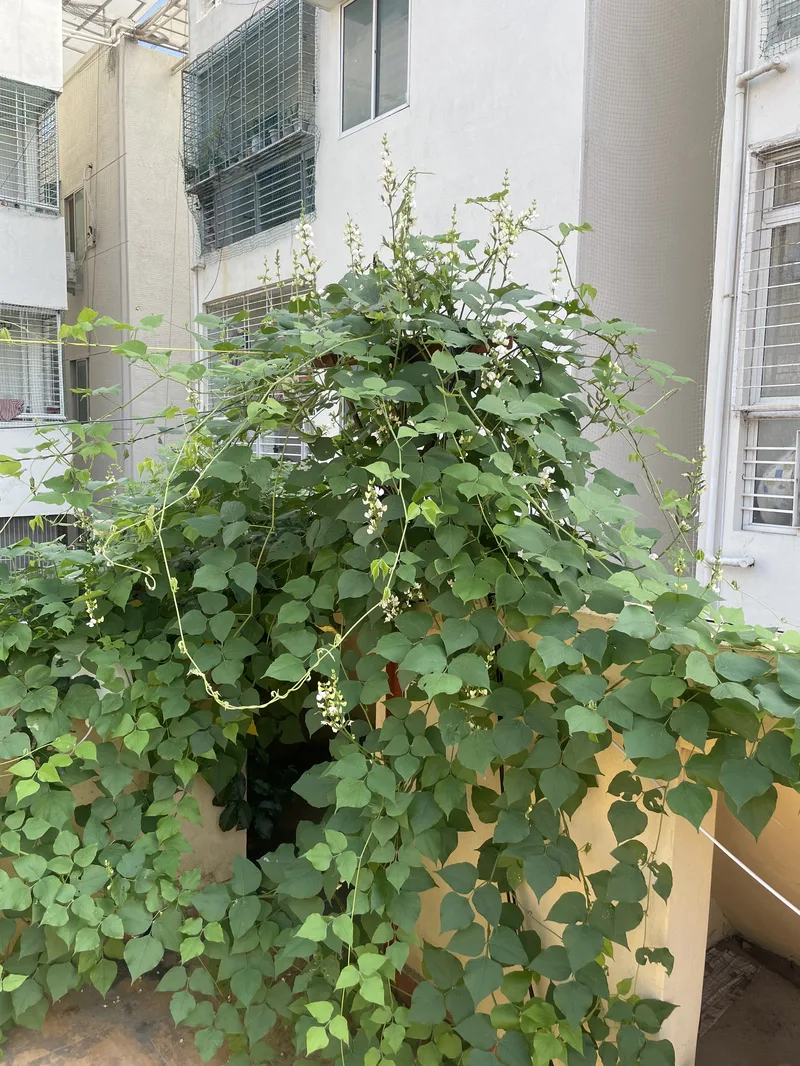
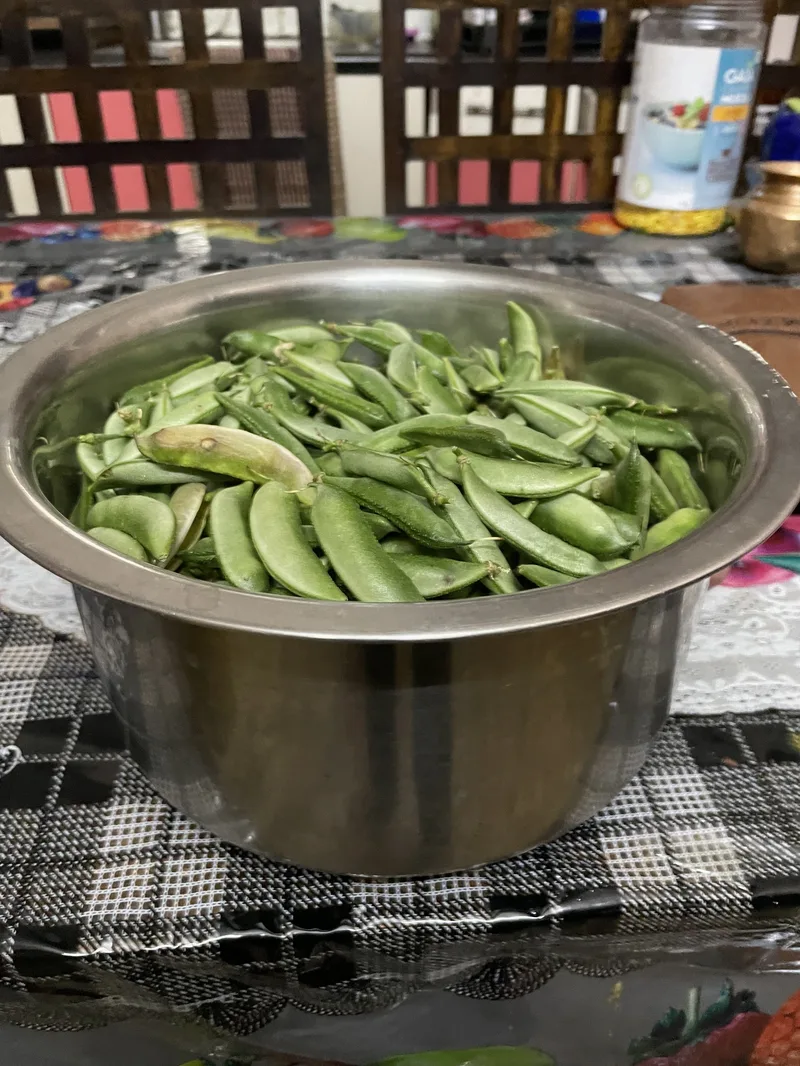
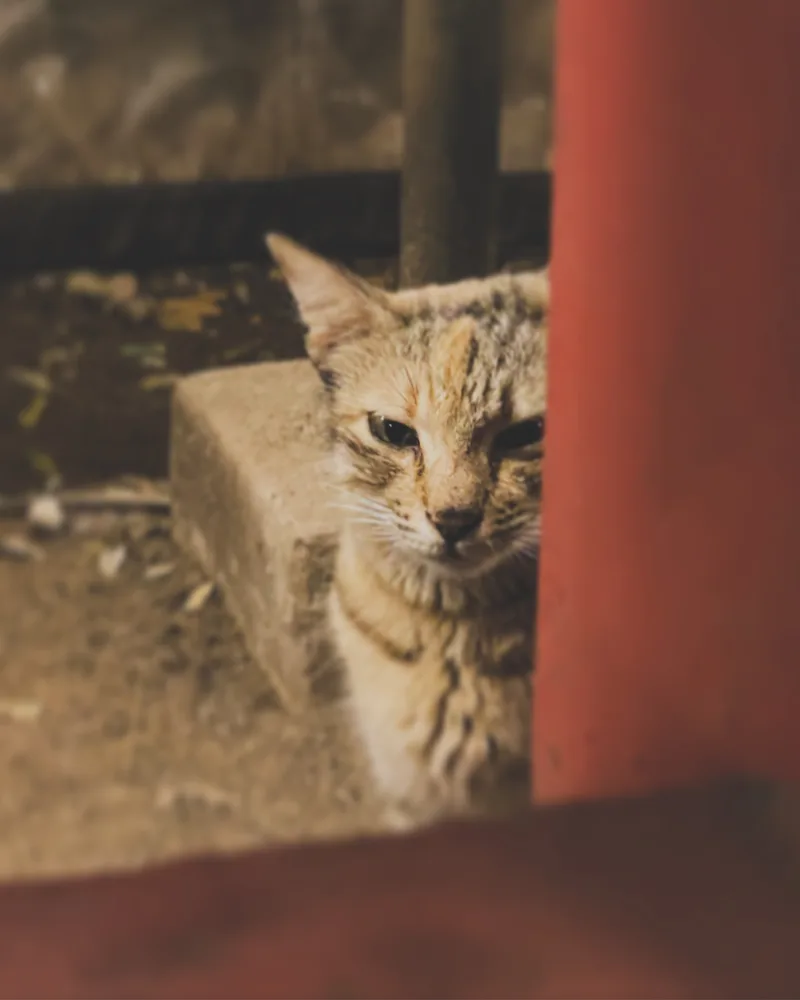
In the early years no birds came: a lawn offers a bird nothing. Then the canopy filled in, and the garden got loud. Bananas came sweet, if slow. Mexican spinach grew almost all year. The climbing beans gave a kilo at a time at their peak. Earthworms turned up wherever you dug, and stray cats kept the rats in check.
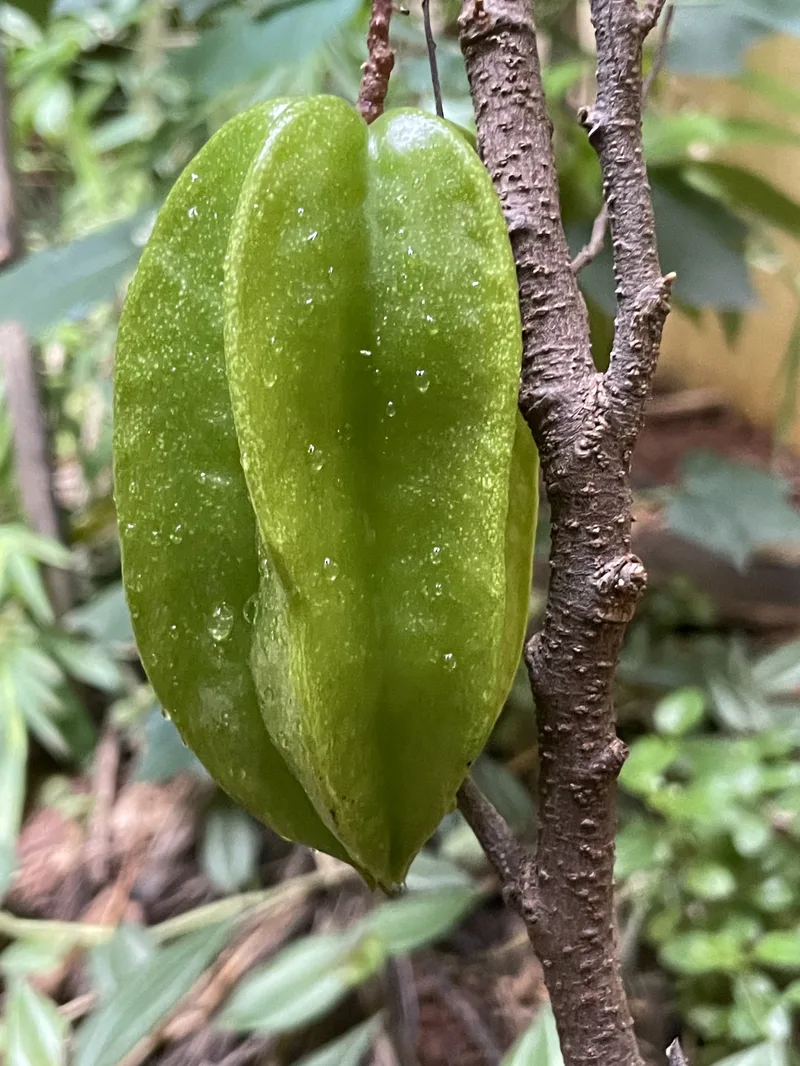
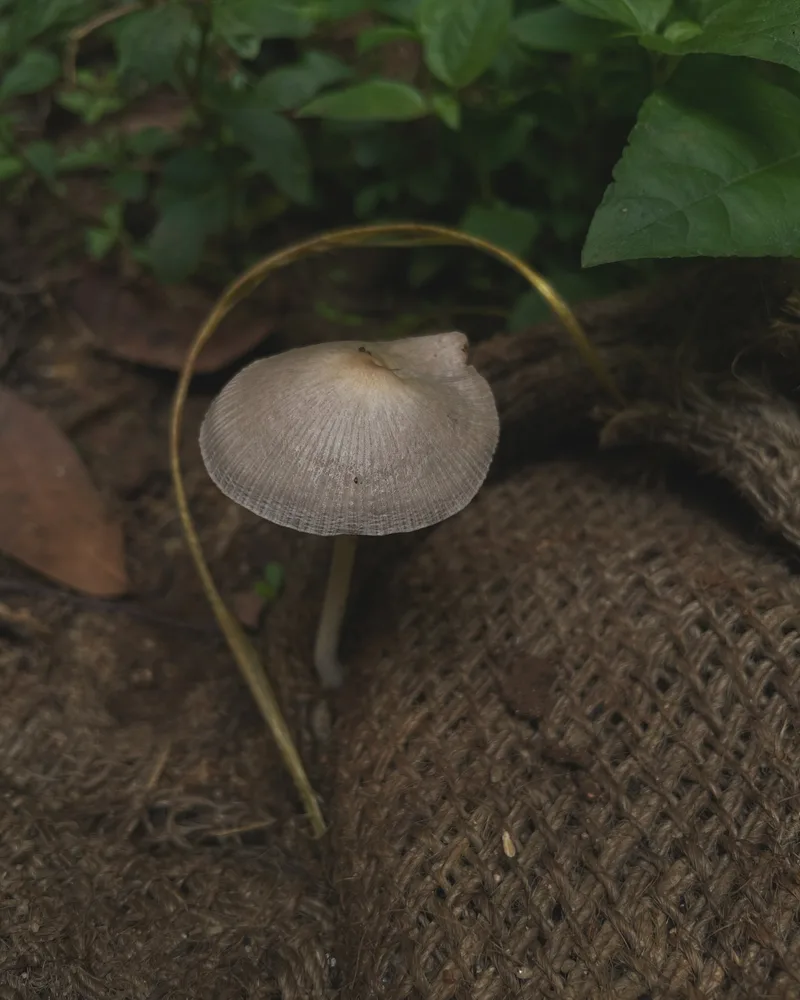
The Secret Table Cafe, Samagram's first business, ran for a few months inside the Avni forest: a single table in a cabin built from about eighty per cent recycled material, where guests ate food from what grew around them and were taken on a tour of the forest.
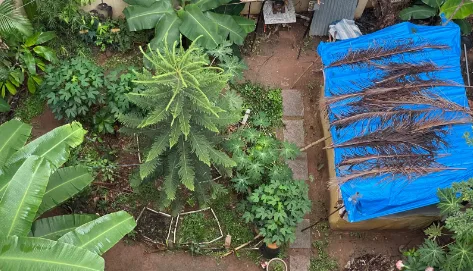
The same method works at backyard scale, and on land you only rent. Write to us about a design, or a site visit.
 Mahadev Foundation